
Can You Legally Sweep Your Own Chimney?
Yes, a homeowner can sweep their own chimney. Check the rules that apply to your property, and remember that cleaning does not replace a chimney inspection.
Need help now? (267) 705-6118
Can You Legally Sweep Your Own Chimney in Pennsylvania?
A homeowner can do the physical work of sweeping a chimney, but that does not automatically satisfy every rule or requirement tied to a home. Check local requirements and any lease, property agreement, or insurance conditions that apply to your situation before you start.
Also separate the right to do the work from whether the work is safe or complete. DIY cleaning does not establish the chimney’s condition, and it may not satisfy an inspection requirement tied to a property sale, appliance change, or other circumstance.
A DIY Sweep Removes Deposits; It Does Not Inspect the Whole Chimney
Sweeping is the removal of soot and creosote from the flue. An inspection checks the chimney and connected appliance for damage, obstruction, or other problems; brushing the flue does not show you the condition of hidden joints or other parts you cannot see.
CSIA homeowner guidance cites the NFPA 211 recommendation for an annual chimney inspection and notes that sweeping is generally needed when creosote reaches 1/8 inch. Read the CSIA homeowner guidance to understand why inspection and cleaning are separate tasks.
Choose DIY Sweeping Only When the Flue Is Accessible and the Job Is Clear
The right choice depends on what you can safely reach and identify. A brush can remove accessible deposits, but it cannot confirm that the chimney is sound or correct a defect.
Owner-level visual check
Use this to look for obvious debris, missing parts, or visible damage from a safe location. It is not a substitute for a close inspection of the flue.
DIY brushing
This may suit a straightforward, accessible flue when you have a brush that fits its shape and size and can work without climbing onto the roof. Stop if deposits are hardened or the flue is difficult to reach.
Professional chimney sweep
Choose a chimney sweep service when the flue is inaccessible, you cannot identify its construction, or you find damage or heavy deposits. A sweep can clean the chimney and help determine when a separate inspection is needed.
Need help now? (267) 705-6118
Gather the Right Chimney Brush and Protective Equipment Before Sweeping
Do not start until the fireplace and chimney are completely cool. Keep children and pets away from the work area, and do not use a ladder or climb onto the roof for a DIY cleaning.
- A correctly sized chimney brush and rods — Match the brush to the flue’s shape and dimensions. Use rods made for the brush so connections stay secure as you work.
- Dust protection and work clothes — Wear eye protection, gloves, and a suitable dust mask. Soot can spread beyond the firebox and irritate your eyes or airways.
- A drop cloth and sealed cleanup supplies — Protect the area around the fireplace and have a container ready for removed debris. Avoid spreading soot while carrying it through the home.
- A light and a safe way to inspect — A flashlight can help you see accessible parts of the firebox and flue. Do not reach into a passage you cannot see or safely access.
Follow These Steps for a Controlled, Owner-Level Chimney Sweep
These steps are limited to an accessible chimney and basic cleaning. Stop rather than improvise if the chimney design, brush fit, or condition is unclear.
- Let the fireplace and chimney cool completely — Check that no embers remain and that the firebox and reachable parts of the chimney are cool to the touch. Do not begin while the appliance is warm.
- Check the firebox and visible flue — Use a flashlight to look for loose debris, an obstruction, damaged parts, or thick, shiny deposits. If you see damage or an obstruction, stop and arrange a professional check.
- Protect the room — Lay down a drop cloth and keep the cleanup container close to the fireplace. Check that nearby furniture and belongings are covered or moved out of the work area.
- Confirm that the brush fits the flue — Use a brush suited to the flue’s shape and size, following the brush maker’s directions. Do not force an oversized brush or use a tool that can damage the flue.
- Attach the rods securely — Connect each rod firmly before feeding the brush into an accessible flue. Check each connection as you add a rod so a loose section does not come free inside the chimney.
- Brush only the section you can reach safely — Move the brush as directed for the tool, without leaning into the flue or climbing onto the roof. Stop if the brush catches, the rods bind, or the flue is not safely accessible.
- Remove debris and recheck the work area — Collect loosened soot and debris carefully, then look again at the accessible firebox and flue. If significant deposits remain or you cannot tell whether the passage is clear, do not light a fire.
Stop DIY Sweeping When You Find Glazed Creosote, Damage, or an Obstruction
Some conditions call for a professional rather than more brushing. Do not use the fireplace until a problem that could affect safe operation has been checked.
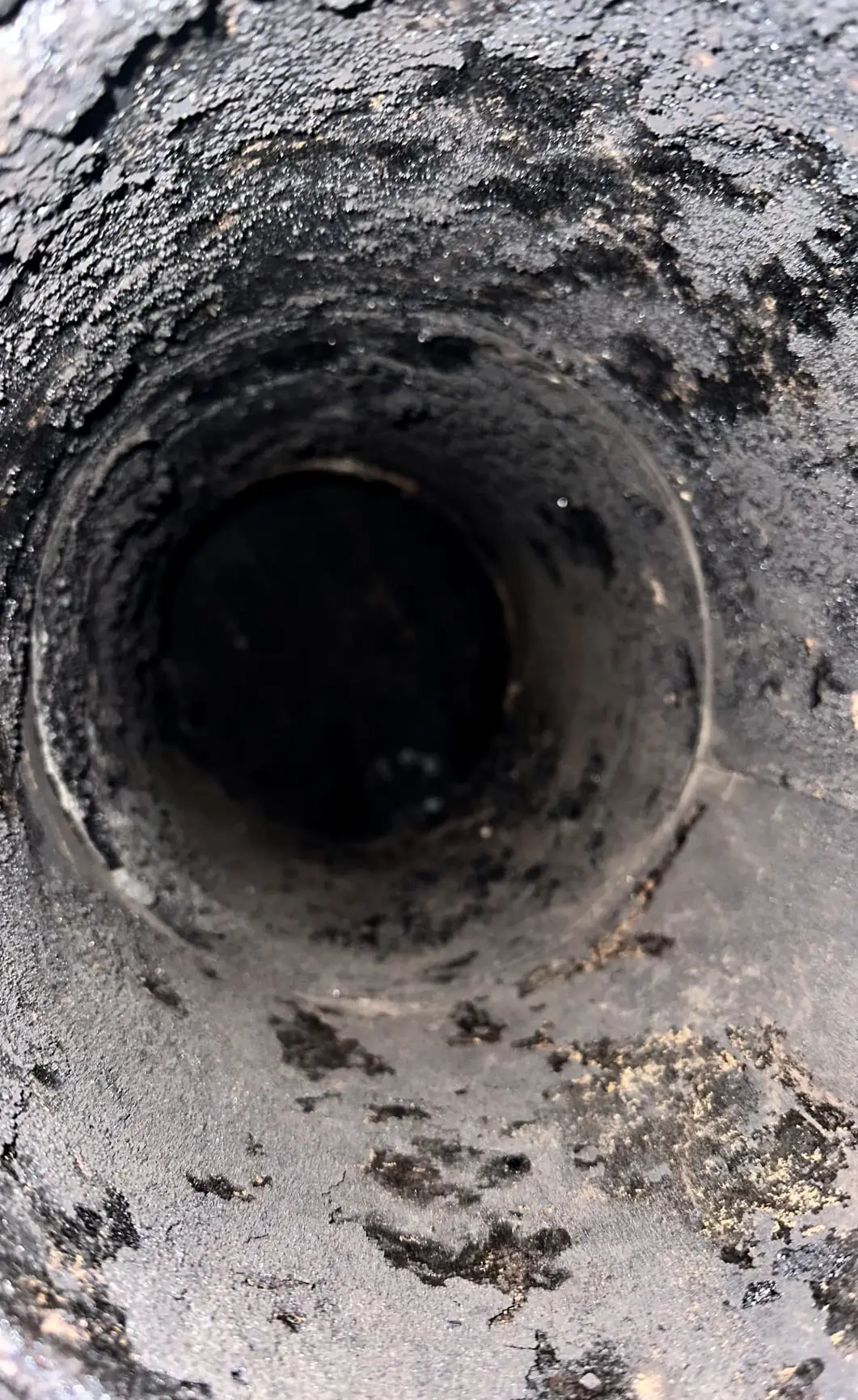
- Shiny, hardened deposits — Glazed creosote is not ordinary loose soot. A basic brush may not remove it, so arrange a chimney sweep instead of scraping or burning it out.
- A blocked or hard-to-reach flue — An obstruction, a brush that will not pass, or a flue that requires roof access is a reason to stop. Do not push tools through a blockage you cannot identify.
- Cracks, loose masonry, or damaged parts — Visible damage needs assessment beyond routine cleaning. Brushing over a damaged area will not repair it or confirm that the chimney is safe to use.
- A change in how the fireplace works — Smoke entering the room or an unexpected change in draft calls for more than a DIY sweep. Leave the fireplace unused until the cause has been checked.
Need help now? (267) 705-6118
A Philadelphia Chimney Sweep Can Handle Cleaning When DIY Access Is Unsafe
Chimney cleaning starts at $89. The work needed and final cost can vary with access, chimney condition, and the deposits present; cleaning is separate from repairs or a more detailed inspection.
A service visit has no single duration for every chimney: access, flue configuration, and condition affect how much work is involved. We offer same-day service, and you can book by calling (267) 705-6118 or using our contact page.
For timing between cleanings, see how often a chimney should be swept. If you cannot safely reach the flue, find damage, or are unsure whether deposits remain, stop using the fireplace and arrange a professional chimney sweep.
Frequently asked questions
Does sweeping my own chimney count as an inspection?
No. Sweeping removes soot and creosote, while an inspection checks the chimney and connected appliance for damage or other problems. The CSIA guidance describes annual inspection separately from cleaning.
Can I sweep a chimney from inside the fireplace?
Only work from a safe, accessible position and follow the instructions for your brush and rods. Do not climb onto the roof or continue if the flue is out of reach, the brush catches, or you find damage.
What should I do if the creosote looks shiny or hard?
Stop brushing and do not light another fire until the chimney has been checked. Hardened or glazed deposits may need more than a basic brush can remove.
What does chimney cleaning from $89 mean?
It is the starting price for chimney cleaning, not a flat price for every chimney. Access, chimney condition, and the deposits present can affect the work and final cost.
Choose a Safe Next Step
If your chimney is difficult to access or shows damage or hardened deposits, book a professional sweep before using the fireplace.