
Do I Need a Chimney Cap?
Yes, most masonry chimneys need a properly fitted cap to keep rain, animals and debris out while allowing exhaust to escape. Check the cap from the ground, and have a chimney sweep assess missing or damaged parts before choosing a replacement.
Need help now? (267) 705-6118
Do I Need a Chimney Cap on My Fireplace Chimney?
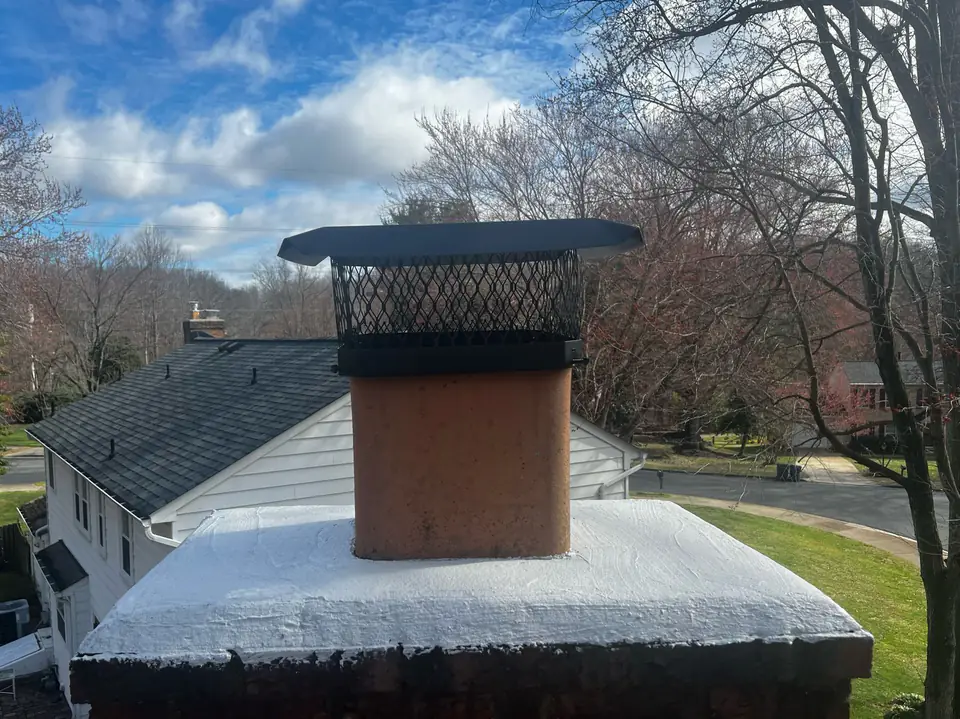
A chimney cap sits over the flue opening and helps block rain, leaves, nesting material and animals. Its screened sides also let smoke and combustion gases exit. Without a suitable cap, moisture and debris can enter the flue, and animals may get inside.
A cap is not a cover for the whole chimney top. The crown, which sheds water away from the masonry, and the flashing around the roof opening do different jobs. A cap cannot fix a cracked crown, failed flashing or damaged flue liner.
For a masonry fireplace or wood-burning stove, a correctly sized cap is a practical way to protect the flue opening. The right style depends on whether the chimney has one flue or several, how the top is built, and what appliance vents through it.
Which Chimney Cap Fits a Single Flue or Multiple Flues?
The cap has to fit the chimney top and leave the flue outlet clear. These common arrangements are useful starting points, but the chimney’s construction determines which one is suitable.
Single-flue cap
This covers one flue opening. It can suit a chimney with a single exposed flue, provided the cap’s dimensions and attachment match the flue tile or masonry.
Multi-flue cap
This covers multiple flue openings together. The installer needs to account for each outlet so the cap does not block exhaust from one of the appliances.
Top-mounted cap
This attaches to the chimney top rather than only to a flue tile. It may fit some chimney configurations, but the crown’s condition and the available mounting surface matter.
What Signs Show That a Chimney Cap Is Missing or Damaged?
Look for clues from the ground and inside the fireplace when it is cold. These signs can point to a cap problem, but they can also come from another part of the chimney.
- No cap visible above the flue — A clear view of an uncovered flue opening may mean the cap is missing. Use binoculars from the ground rather than climbing onto the roof.
- A loose, tilted or rusted cap — A cap that appears displaced or badly corroded may not stay secure or keep debris out. Do not try to reach it from the roof.
- Animal or nesting sounds — Scratching, movement or nesting material can mean an animal has entered the flue. Do not light a fire or push objects into the chimney.
- Water or debris in the firebox — Wet patches, leaves or twigs can point to an open flue, but a damaged crown or flashing can also let water in. The cap is only one possible source.
Need help now? (267) 705-6118
How to Check for a Chimney Cap Without Going on the Roof
You can gather useful information without climbing, removing parts or putting your hands into the flue. Keep the appliance off while you check, and leave roof-level work to a chimney professional.
- Let the fireplace or stove cool — Wait until the appliance is completely cold before looking inside. Check that no embers remain before using a flashlight near the firebox.
- Look up from the ground — Use binoculars from a safe place on the ground to see whether a cap appears to cover the flue. Check for a tilted shape, visible gaps or obvious corrosion.
- Note the chimney arrangement — From the ground, note whether you see one flue opening or several. That detail helps determine whether a single-flue or multi-flue cap may be needed.
- Look inside the firebox — With the appliance cold, shine a flashlight upward from the fireplace opening without reaching into the flue. Look for daylight, loose debris or animal material, and do not disturb anything you find.
- Check nearby areas for water clues — Look for dampness around the fireplace and on the wall or ceiling near the chimney. Record where it appears; water can enter through the crown or flashing as well as through an uncovered flue.
- Take photos from a safe position — Use binoculars or a phone camera from the ground to document the chimney top and any visible damage. Check that the pictures show the full top, not only a close-up of one edge.
- Arrange a professional assessment — Share what you observed and the photos when booking. A chimney professional can check the cap, flue opening and nearby chimney components before recommending installation or a separate repair.
When a New Chimney Cap Will Not Solve the Problem
A new cap will not correct water entry caused by a cracked crown, failed roof flashing or damaged masonry. If water continues after a cap is fitted, the source may be elsewhere on the chimney; chimney crown repair addresses a different part of the system.
A cap can also be the wrong response if the flue itself is damaged, blocked or not suited to the connected appliance. Smoke entering the room, persistent downdrafts or a strong change in fireplace performance calls for a chimney assessment, not a larger or more restrictive cap.
Do not reach into a flue to remove an animal, nest or blockage. Stop using the appliance and arrange professional help when you see debris or suspect an obstruction.
What Happens During Chimney Cap Installation?
Installation starts with identifying the flue arrangement and checking the chimney top where the cap must attach. The cap must cover the opening without obstructing the flue, and its attachment needs to suit the chimney’s surface and dimensions.
If the chimney top is damaged, fitting a cap alone may leave the underlying issue unresolved. We offer chimney cap installation service and can check whether the chimney top needs attention as part of the assessment. The installation starting price is $250; cap size, configuration and separate repair needs can affect the work.
For more on the starting price and factors that may change the job, see how much a chimney cap costs. A visit’s length depends on the chimney and the work required, so describe what you can see when booking.
Need help now? (267) 705-6118
What to Check After a Chimney Cap Is Fitted
After installation, check from the ground that the cap looks level and covers the flue opening. Keep the installation information with your home records so you can identify what was fitted if the cap needs service later.
Watch for new water marks, animal activity or smoke that spills into the room. Those signs do not automatically mean the cap has failed; another chimney component or a blockage may be involved. Stop using the appliance if smoke enters the living space and arrange an inspection.
The Chimney Safety Institute of America provides homeowner resources on chimney inspection and maintenance. An annual inspection can help identify problems with the cap and other parts before you rely on the fireplace.
Frequently asked questions
Can I install a chimney cap myself?
A cap is mounted at the chimney top, so installation involves working at roof level and securing a part that must fit the flue correctly. Do not climb onto the roof or improvise a cover; have the cap and mounting surface checked by a chimney professional.
Can a chimney cap stop rain from leaking into my fireplace?
A properly fitted cap can keep rain from entering directly through an open flue. If the crown, flashing or masonry is damaged, water may still get in, so persistent dampness needs an assessment of the whole chimney top.
Does every chimney need the same kind of cap?
No. The number of flues, their dimensions and the chimney-top construction affect the cap style and attachment. A cap for one flue may not suit a chimney with several openings.
What should I do if an animal is inside the chimney?
Do not light a fire, reach into the flue or try to pull the animal out. Stop using the appliance and arrange professional help; the chimney should be checked for nesting material or damage before use resumes.
Get Your Chimney Cap Checked
Call Philadelphia Chimney Sweep at (267) 705-6118 to arrange chimney cap installation or an assessment of a missing or damaged cap.