
Do Chimney Sweeps Make a Mess in Your Home?
Do chimney sweeps make a mess? They can, but a properly contained cleaning keeps soot and debris from spreading through the room. Our chimney cleaning service starts at $89 and removes soot and creosote from the flue.
Need help now? (267) 705-6118
Why Chimney Cleaning Can Spread Soot
Soot and creosote are loose deposits inside the flue. Brushing them free can release dust and small debris, especially if the fireplace opening, hearth, or cleanout area is left exposed. A fireplace that has not been used recently can still have loose residue inside it.
A messy result is not inevitable. The key is to contain the fireplace opening and the path between the work area and the exit before the brush and rods are used. The amount of residue, the fireplace design, and the access points can all affect how much material comes loose.
Creosote buildup matters beyond cleanliness: the Chimney Safety Institute of America says it should be removed once it reaches 1/8 inch. Its homeowner resources explain chimney maintenance and sweeping in more detail.
How a Chimney Sweep Keeps Soot Near the Fireplace
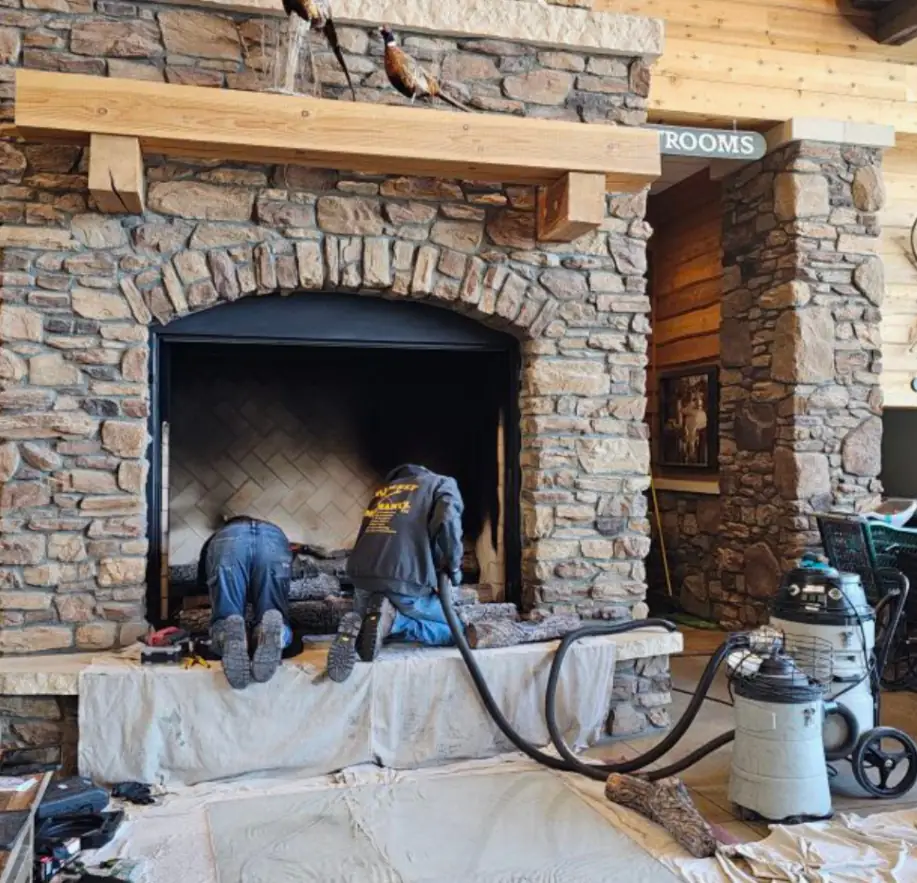
Containment focuses on the fireplace opening, nearby surfaces, and the route used to bring tools in and out. These details matter because soot can travel on a brush, a rod, or a person’s shoes if the work area is not managed.
Cover the hearth and floor
A drop cloth or similar floor covering protects the surface directly in front of the fireplace. Check that it reaches beyond the hearth edge where tools and debris may be handled.
Control the fireplace opening
A barrier or sealed work area helps keep airborne dust from entering the room. Make sure the sweep can still reach the firebox and any required cleanout opening.
Collect loose residue
A vacuum designed for fine ash and soot can collect debris as it is loosened. After the work, check the hearth and the floor immediately around the fireplace for stray residue.
Keep the route clear
Moving fragile items and obstacles away from the work path lowers the chance of bumps and makes it easier to carry brush rods and other tools safely.
What to Move Before a Chimney Cleaning
A few minutes of preparation can protect belongings and give the sweep room to work. Clear the area around the fireplace without reaching into the flue or trying to remove deposits yourself.
- Clear the mantel and hearth — Move framed photos, candles, decorations, and fireplace tools away from the opening. Check that the whole hearth is accessible.
- Shift nearby furniture — Move chairs, rugs, and small tables far enough back to open the work area. Check that the sweep can reach the fireplace without stepping over belongings.
- Protect delicate items — Put nearby electronics, textiles, and breakable objects in another room or cover them. Check that covers do not block the fireplace or the route to it.
- Keep children and pets out of the work area — Set up a safe space away from the fireplace and tools. Check that the work path stays clear for the full visit.
- Share what you have noticed — Point out smoke entering the room, a persistent odor, falling debris, or a damper that does not move properly. Check that the sweep knows which fireplace or appliance has the issue.
Need help now? (267) 705-6118
What Happens During a Chimney Cleaning Visit
A cleaning generally moves from preparing the work area to removing deposits and checking the result. The exact approach depends on the fireplace and chimney, so describe unusual symptoms before work begins.
- Confirm the fireplace is cool — The sweep checks that the firebox is safe to work around and identifies ash or hot embers. Do not start a fire before the visit; the firebox should be cold.
- Set up floor protection — A drop cloth protects the hearth and nearby floor while the tools are brought in. Check that the setup leaves the fireplace opening and the sweep’s work area accessible.
- Check the firebox and damper — The firebox, damper, and visible opening help identify how the flue can be reached. Tell the sweep if the damper sticks or if you have seen smoke spill into the room.
- Contain the opening — A screen, cover, or other containment setup helps limit the spread of loose soot. Check that the method still allows access for the brush and rods.
- Brush the flue — A chimney brush attached to rods loosens deposits from the flue walls. The brush size and access method depend on the chimney; do not push a household brush or tool into the flue.
- Collect soot and debris — A suitable vacuum or collection method captures loosened material near the fireplace or cleanout. Check that soot is being collected rather than left on the hearth or floor.
- Check the work area — Once the tools are out, look over the hearth and nearby floor for remaining residue. Tell the sweep right away if you see soot outside the protected area.
When Soot Outside the Fireplace Needs Attention
A small amount of residue near the work area is different from soot repeatedly appearing in the room during normal fireplace use. Smoke or soot entering the living space can point to a draft problem, a blocked flue, or another condition that needs inspection rather than more sweeping alone.
Stop using the fireplace if smoke spills into the room or you see debris falling from the chimney. Tell the sweep what happened and when; a chimney cleaning service removes deposits, while an inspection can help identify a separate problem that cleaning will not correct.
Do not try to clear a blockage by reaching into the chimney or climbing onto the roof. A sweep can check the accessible parts and advise whether the condition calls for repair or a closer inspection.
When to Choose Chimney Cleaning or an Inspection
Cleaning and inspection address different needs. Cleaning removes deposits; inspection evaluates the chimney’s condition. The symptom you notice helps determine which service to ask about.
Choose cleaning for soot or creosote buildup
A chimney with deposits in the flue needs those deposits removed. Ask about cleaning when you see soot buildup or when the fireplace has produced a smoky, dirty fire.
Ask about inspection for a new symptom
Smoke entering the room, falling masonry, or a damper that will not operate points to a condition that cleaning may not fix. Describe the symptom so the sweep can determine whether inspection is also needed.
Ask about a closer examination after a fire or damage
A chimney fire, visible damage, or a significant change to the appliance calls for more than a basic cleanup. Mention the event before scheduling so the service can be matched to the issue.
Need help now? (267) 705-6118
How Long the Cleaning Takes and How to Book
There is no single visit length for every chimney. The time depends on access, the amount of buildup, the fireplace setup, and whether the sweep finds a condition that needs attention beyond cleaning. Ask what the planned work covers when you book, especially if you have more than one fireplace or appliance.
Tell us whether the fireplace burns wood or uses gas, when it was last cleaned if you know, and what prompted the visit. Those details help identify the right service before the appointment. You can contact us to book; same-day service is available.
For more on the terms people use for this work, read chimney sweep vs. chimney cleaning: what is the difference?. If you want to compare what to ask before hiring, see how to find a reputable chimney sweep.
What to Check After the Chimney Sweep Leaves
Look over the hearth, floor, mantel, and nearby furniture before putting the room back in order. If you find soot beyond the work area, point it out while the sweep is still there so the location can be checked and cleaned.
Ask what was removed and whether the sweep noticed a problem with the damper, firebox, or flue. Keep the fireplace out of use if smoke continues to enter the room or a visible defect remains; cleaning does not repair damaged chimney parts.
A chimney cleaning should leave you with a cleaner flue and a clear account of any concern found during the visit. To return to a fireplace that smokes or sheds soot during use, arrange an inspection rather than treating the symptom as ordinary cleaning residue.
Frequently asked questions
Will chimney cleaning leave soot in my living room?
A contained setup is intended to keep soot and debris around the fireplace and work area. Move nearby belongings before the visit, then check the hearth and floor before putting the room back together.
Should I cover my furniture before the sweep arrives?
Move delicate belongings out of the room when you can, and cover nearby furniture that is difficult to move. Keep the fireplace opening and the route to it clear so the sweep can set up and work.
How long does a chimney cleaning visit take?
Visit length varies with the chimney’s access, the amount of buildup, and the fireplace setup. Tell us how many fireplaces need service and mention any access issue when booking.
What should I do if smoke enters the room after cleaning?
Stop using the fireplace and report the smoke, since cleaning deposits does not correct every draft or chimney problem. The fireplace may need an inspection to identify the cause.
Book a Chimney Cleaning
Tell us what you have noticed at your fireplace and book by calling (267) 705-6118 or using our contact form.